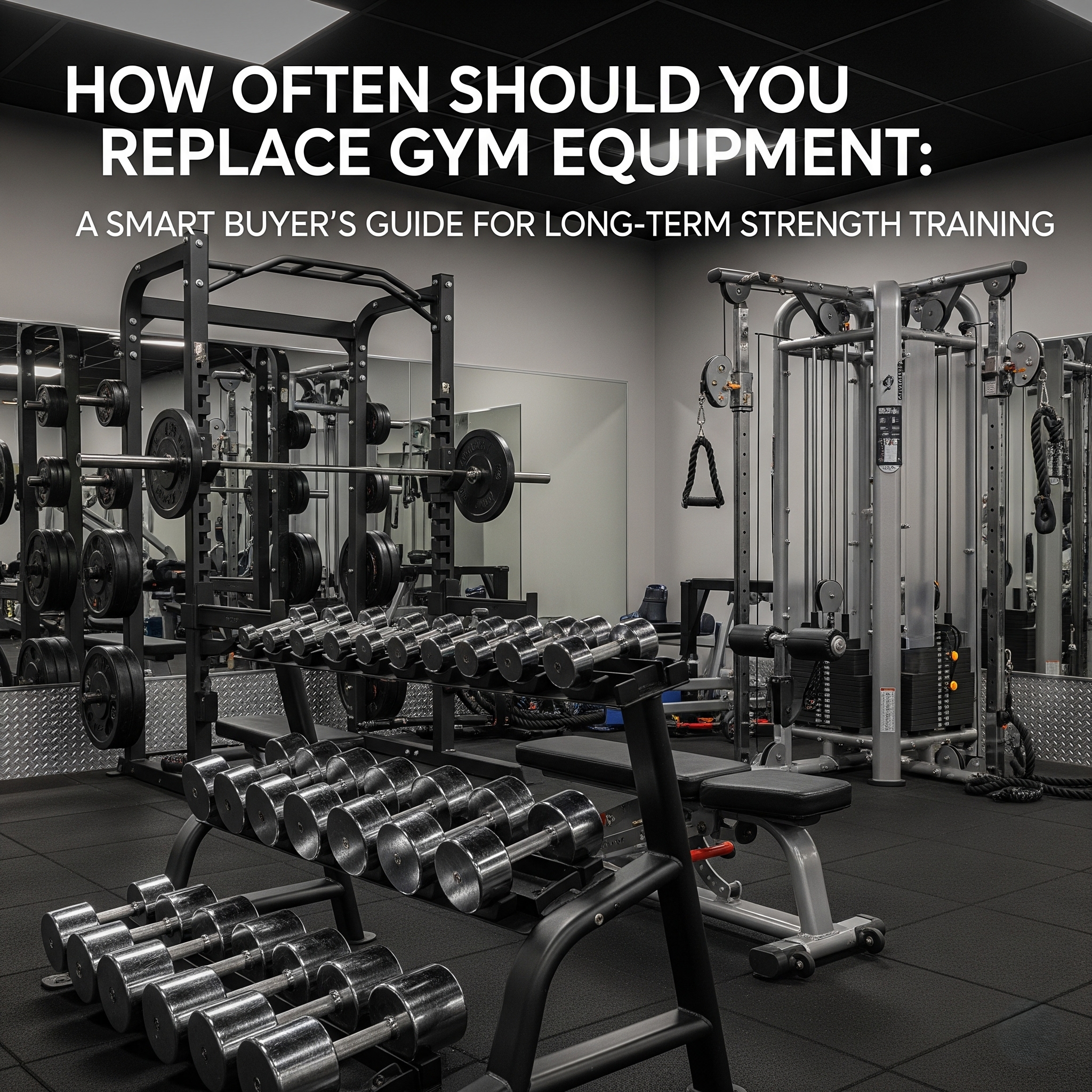
Gym equipment is an investment—whether you’re outfitting a home gym, managing a commercial facility, or upgrading your strength training setup. One of the most common questions buyers ask is: How often should gym equipment be replaced?
The short answer: it depends on quality, usage, and maintenance. The long answer—and the one that saves you money—is understanding why buying high-quality gym equipment from the start dramatically extends replacement timelines.
This guide breaks down replacement timelines by equipment type and explains why choosing durable equipment from trusted suppliers like Expert Fitness Supply is often the most cost-effective decision you can make.
Many people assume gym equipment wears out simply because of time. In reality, quality matters far more than age.
Low-cost, mass-produced equipment often fails due to:
Inferior steel quality
Weak welds and frames
Poor knurling or coating
Cheap bearings, bushings, or padding
High-quality equipment, on the other hand, is designed to withstand years of heavy loading, repeated drops, and daily use.
👉 This is why experienced lifters and gym owners prioritize build quality over price.
Replace sooner if you notice:
Bent shafts
Sleeves that no longer spin smoothly
Excessive rust or flaking coating
Why quality matters:
Premium barbells use high-tensile steel, precision-machined sleeves, and reliable bearing or bushing systems. Cheaper bars often fail within a few years, especially under heavy lifts.K

Weight plates are among the longest-lasting gym investments—if they’re made right.
Replace if you see:
Cracks in bumper plates
Loose or separated inserts
Excessive chipping that affects balance
High-quality plates from reputable suppliers maintain consistent weight accuracy and structural integrity for decades.

A solid rack should practically last a lifetime.
Warning signs:
Frame flex under load
Cracked welds
Unstable uprights
Cheap racks may look similar, but steel thickness, hole spacing, and weld quality make a massive difference in safety and longevity.

Benches wear faster than racks or plates due to padding compression and moving parts.
Replace when:
Padding loses firmness
Frames wobble under load
Adjustment mechanisms fail
Higher-end benches use dense foam, reinforced frames, and quality hardware, extending lifespan significantly.
It’s tempting to choose cheaper equipment upfront—but replacement costs add up fast.
Lower upfront cost
Faster wear and failure
Higher injury risk
Frequent replacements
Longer lifespan
Better performance
Improved safety
Lower long-term cost
💡 One premium barbell that lasts 15 years is cheaper than replacing three budget bars over the same period.
This is where suppliers focused on durability and performance, like Expert Fitness Supply, stand out.
Even the best equipment needs care:
Clean barbells regularly
Store plates properly
Tighten bolts and hardware
Control moisture and humidity
However, maintenance can’t fix poor materials. Quality construction is the foundation of longevity.
High-quality home gym equipment can last 10–30 years, depending on the item and usage.
Yes. Durable equipment reduces replacement costs, improves safety, and performs better long-term.
Benches, adjustable mechanisms, and low-quality barbells typically wear out first.
Surface rust can be cleaned, but deep corrosion weakens structural integrity and should not be ignored.
Bent shafts, seized sleeves, or compromised knurling are clear replacement signs.
Choosing price over build quality. Cheap equipment almost always costs more in the long run.
Replacing gym equipment shouldn’t be a frequent chore. When you invest in well-built, high-quality strength equipment, you’re buying time, safety, and performance.
Whether you’re building a home gym or upgrading a serious training space, choosing quality-focused suppliers like Expert Fitness Supply ensures your equipment works as hard as you do—year after year.